
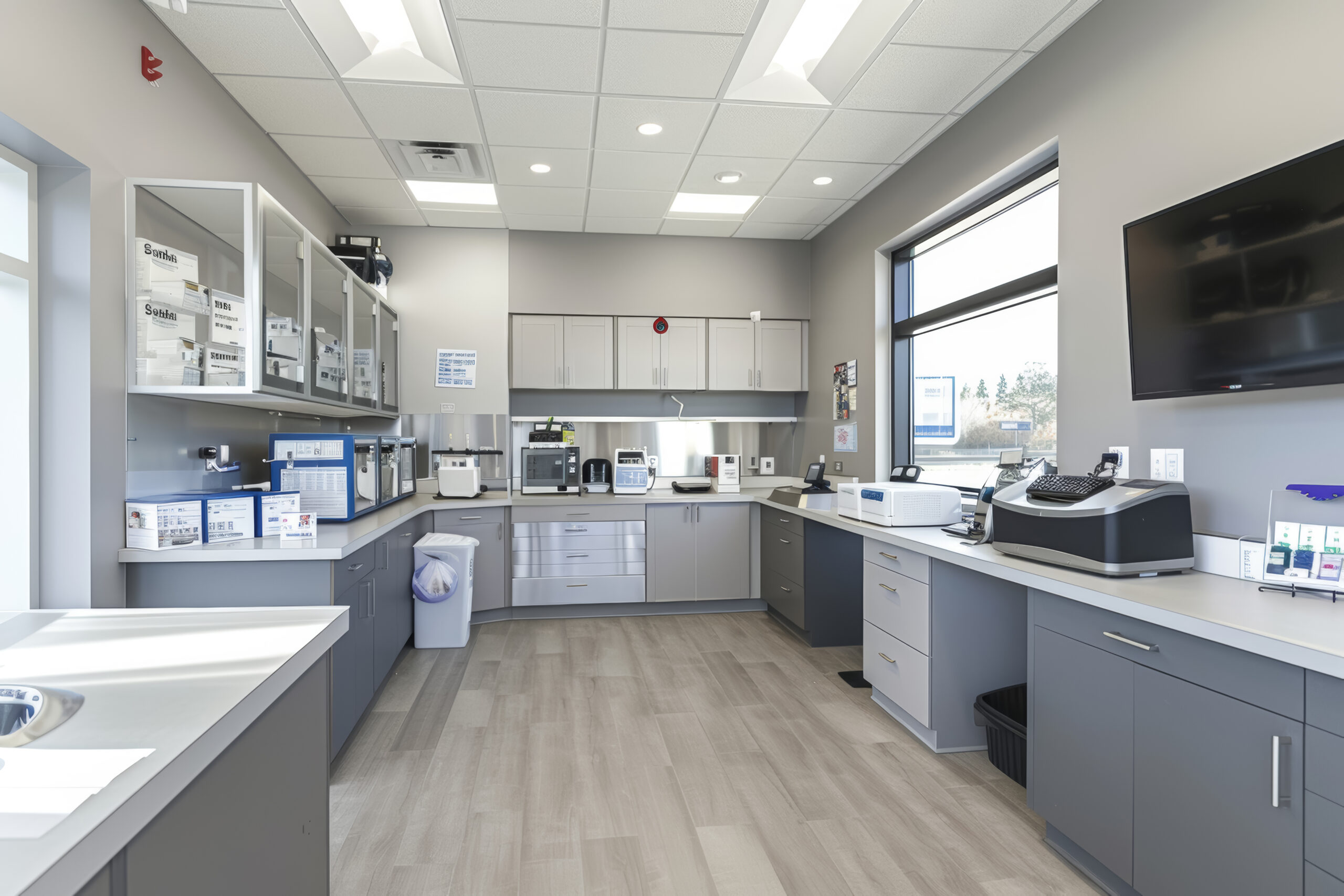
Opening or upgrading a medical practice involves more than interior design and functional spaces. Australian regulations require clinics to meet strict healthcare standards. But regulatory compliance is only the starting point. A well-executed healthcare fitout can improve patient safety, reduce operational risks and create a long-lasting, functional environment that adapts to changes in medical technology and care standards.
This practical guide details what every healthcare provider should consider before starting a medical fitout, including legal requirements, accessibility, infection control and patient comfort.
Why compliance matters in medical fitouts
Every medical facility in Australia must meet the National Construction Code (NCC), Building Code of Australia (BCA) and AS 1428.1 Design for Access and Mobility standards. These regulations ensure that healthcare environments are safe, functional and accessible for everyone.
The NCC and BCA set the minimum building safety, structural and performance standards for all facilities in Australia. Australian Standard 1428.1 specifically addresses accessibility, ensuring medical practices are inclusive for patients and staff.
Non-compliance can lead to failed inspections, delayed Occupation Certificates and costly rework. Accreditation bodies such as Australian General Practice Accreditation Limited (AGPAL) and Quality Innovation Performance (QIP) also assess facilities for compliance with safety, accessibility and infection control before certification.
For example, a suburban General Practice (GP) clinic expanding to add new treatment rooms must apply for council approval, such as through a Complying Development Certificate (CDC), and obtain an Occupation Certificate (OC) prior to completion. These are essential to passing inspection and ensuring patient safety.
Following a structured healthcare renovation checklist during planning and construction helps clinics avoid these pitfalls and streamline approvals.
Designing for safety, hygiene and accessibility
Infection control and accessibility are essential in every healthcare fitout. The physical layout must reduce cross-contamination risks by using proper zoning to separate clean and contaminated areas. Features such as vinyl flooring, coved skirtings, washable paint finishes, mechanical ventilation and hands-free taps support infection control protocols required in medical environments. Depending on the facility type, some fitouts may also require the integration of medical gases, suction systems, specialised plumbing or radiation shielding to meet clinical and regulatory standards.
Accessibility standards under AS 1428.1 make medical practices safer and more inclusive. Requirements include:
- Ramps and step-free entrances with non-slip surfaces
- Wide corridors and minimum 850mm wide doorways with door circulation space to allow wheelchair access
- Handrails, nosings and tactiles on staircases
- Accessible signage with tactile and braille elements
- 30% luminance contrast
- Properly designed and equipped accessible and ambulant bathrooms for patients with mobility needs
Permits, certifications and regulatory approvals
Building or renovating a healthcare facility involves a complex approval process. Projects typically require:
- Development Applications (DA) — Approval from local councils for new builds, significant alterations or heritage listed buildings
- Construction Certificates (CC) — Verification that plans comply with building codes
- Complying Development Certificates (CDC) — A fast-tracked application process through a private certifier
- Occupation Certificates (OC) — Final approval for the facility to open
- Healthcare-specific approvals — Compliance with state health department regulations and standards, such as the National Safety and Quality Health Service (NSQHS) Standards
Each stage involves documentation, inspections and liaison with multiple authorities. Our team efficiently manages these requirements, reducing the risk of project delays and ensuring your practice is fully compliant at handover.
Creating a patient-focused environment
Compliance is essential, but patient comfort plays a major role in a successful healthcare facility. A well-designed medical fitout should create an environment that feels welcoming, private and calming.
Key considerations include:
- Lighting — Natural light can reduce patient anxiety and improve staff well-being. Combine it with adjustable/dimmable artificial lighting for treatment rooms.
- Acoustics — Soundproofing and insulated partitions protect patient confidentiality and create a more comfortable setting.
- Ventilation and air quality — Effective heating, ventilation and air conditioning (HVAC) systems and high-efficiency particulate air (HEPA) filtration improve air circulation and reduce airborne contaminants.
- Ergonomics — Patient furniture, reception counters and treatment rooms should be laid out for comfort and accessibility.
These design features benefit patients and staff alike. A calm and safe clinic can increase patient satisfaction and efficiency, which in turn supports better clinical outcomes.
Futureproofing your medical practice
Healthcare services evolve with changing patient demographics, new treatments and updated regulations. While not mandatory, planning flexibility into your healthcare fitout is recommended to protect your investment and make future changes simpler.
Strategies include:
- Modular layouts — Partition walls and furniture systems that can be reconfigured for different services
- Scalable treatment rooms — Rooms designed with utilities and infrastructure that allow new equipment to be installed easily
- Technology integration — Cabling and power systems designed to support future digital health technologies, telehealth setups and medical imaging equipment
- Sustainable design — Energy-efficient lighting, HVAC systems and water-saving fixtures that meet evolving environmental standards
Futureproofing helps maintain ongoing compliance. As standards change, facilities built with adaptable layouts and infrastructure can update their spaces without undergoing major construction or risking operational downtime.
Selecting the right partner for compliance-driven fitouts
Meeting these standards requires expertise in healthcare construction. A specialist partner can:
- Interpret complex codes and regulations correctly
- Plan infection control measures during the design phase
- Manage council approvals and certifications
- Coordinate multiple trades while maintaining operational safety
- Deliver projects on time and within budget without compromising compliance
Choosing an experienced medical fitout provider means having guidance through every project stage, from initial design to council approvals and final certification.
Build with a partner who understands compliance
Delivering a compliant, functional and patient-friendly medical fitout requires more than construction skills — it takes a partner who understands complex healthcare standards and manages every stage of the project with precision.
At DY Constructions Australia, we specialise in fully compliant healthcare fitouts across Australia. We work across a wide range of healthcare settings, including radiology clinics, dental surgeries, laboratories, podiatry practices and more. Our in-house team oversees everything from concept design and council approvals to construction and final handover. With proven experience navigating regulations enforced by councils, health departments and accreditation bodies, we help you secure approvals faster and open your practice with confidence.
Reach out to our team today and see how our healthcare and medical fitout services can streamline your project and bring your practice to life — on time and with peace of mind.

How A Professional Office Fitout Can Boost Your Business Performance
A well-designed workplace plays a direct role in how a business operates each day. The right environment can streamline work, support collaboration, improve staff comfort

How Much Does A Medical Fitout Cost Compared To An Office Fitout?
Every fitout is an investment in how a space looks, feels and functions. But when it comes to understanding the cost of a medical fitout